No. 07 · Blue & Violet
Indigo Milk Cap
Lactarius indigo
“The mushroom that bleeds blue”
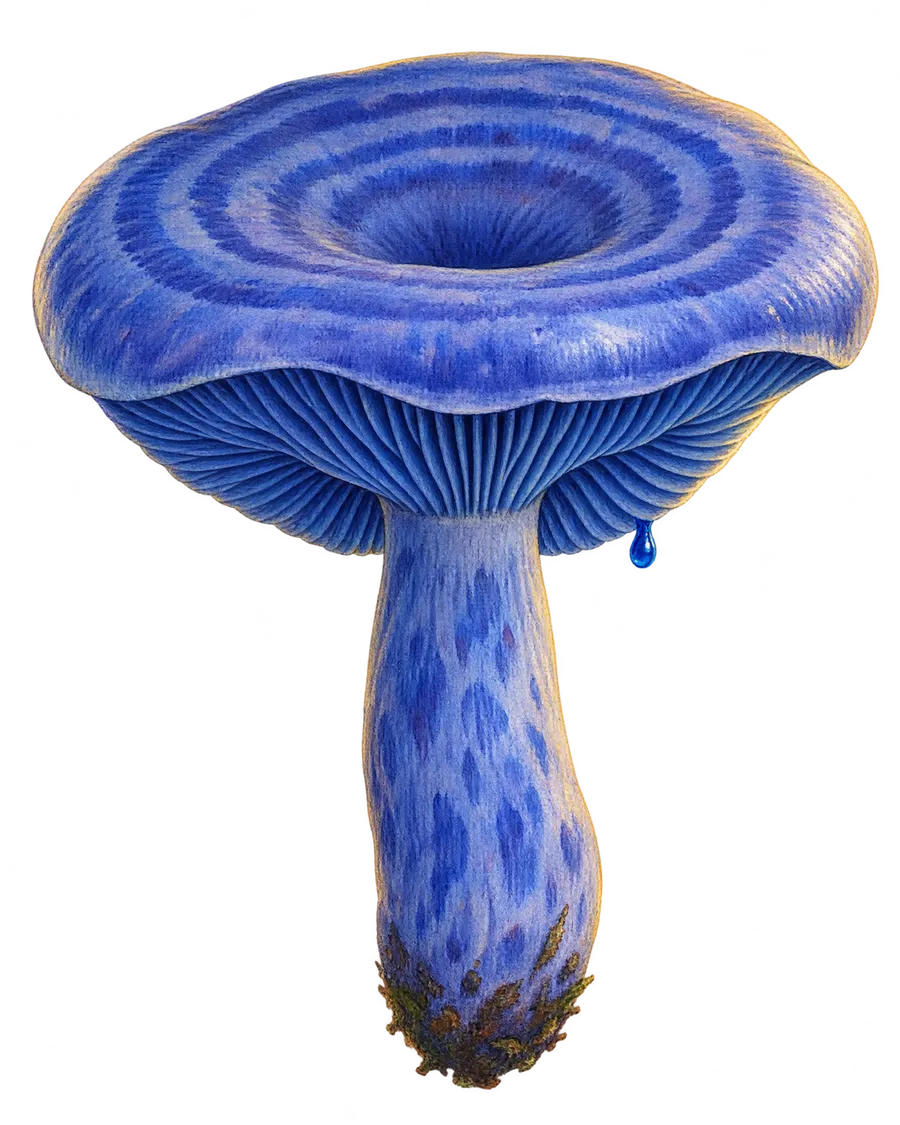
A mushroom the colour of blue jeans, cap, gills, stem and all. Cut it and it oozes a slow drop of indigo milk. One of the rare truly blue foods in nature.
Fun fact!It is sold in local markets in Mexico, Guatemala and China.
- Where in the world
- Eastern North America, Mexico, Central America and East Asia
- Home
- Oak and pine forests
- When to look
- Summer to autumn
- Size
- Caps 5–15 cm
Blue is one of the rarest colours in nature, which makes the indigo milk cap a real surprise on the forest floor. Everything about it is blue: the cap, the crowded gills, the short stout stem. Older specimens fade to a silvery blue-grey with greenish stains, but a fresh one is the colour of new denim.
Why “milk cap”?
The Lactarius genus is famous for one trick. Break the gills or the flesh and the mushroom releases a milky fluid, called latex. In most milk caps the latex is white. In this one it is deep indigo, and it slowly turns green as it meets the air.
Where it lives
The indigo milk cap is mycorrhizal. That means it lives in partnership with tree roots, especially oaks and pines. The fungus helps the tree pull water and minerals from the soil, and in return the tree shares sugars made by its leaves. Most of the time the fungus is invisible underground. The blue mushroom only appears when it is ready to spread spores.
In the kitchen
It is edible and is sold in markets in Mexico, Guatemala and parts of China. The flavour is mild and slightly peppery, and the texture is grainy and firm, so it is often sliced thin and grilled. Cooking turns it a duller grey, but it stays unmistakable. As always, eat it only after an experienced forager has confirmed the identification.