No. 03 · Pink & Red
Pink Oyster
Pleurotus djamor
“The flamingo of fungi”
Ruffled, fan-shaped caps in a shade of pink so bright it looks painted on. The pink oyster is a tropical speed-grower that turns up on dead wood after warm rain.
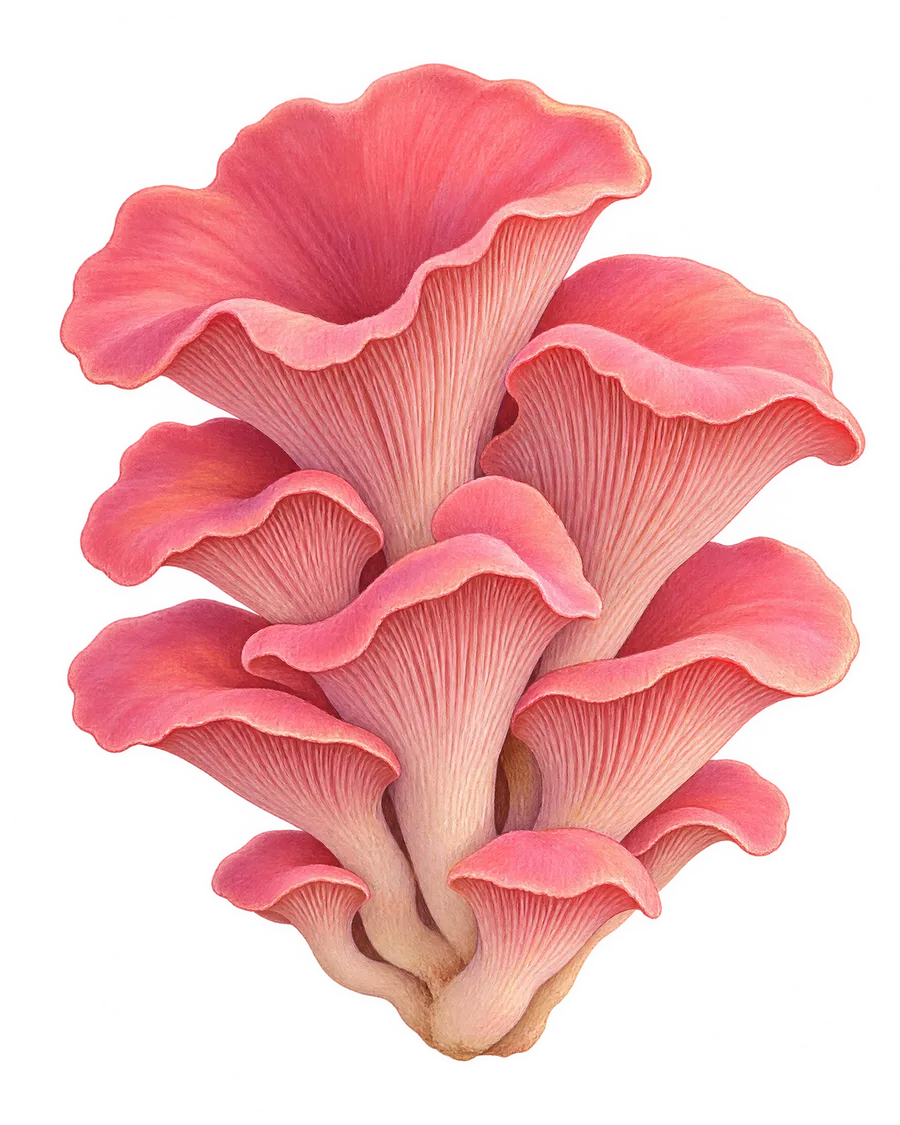
Fun fact!Its hot-pink colour fades to a soft tan the moment it hits a hot pan.
- Where in the world
- Tropics and subtropics around the world
- Home
- Dead hardwood, palms and bamboo
- When to look
- Rainy seasons; year-round in warm climates
- Size
- Caps 2–8 cm
There are not many living things that are naturally this shade of pink. The pink oyster grows in overlapping clusters of thin, wavy caps, each one ribbed underneath with fine gills that run down to a stubby stem. A fresh cluster looks like a bunch of flamingo feathers pinned to a log.
Why so pink?
The colour comes from pigments in the cap tissue. Scientists are still studying exactly what they do, but pigments in fungi often help protect cells from strong sunlight, which makes sense for a species that loves the bright, humid tropics. The pink is strongest in young caps and fades as they age or dry out.
Where it lives
Pink oysters are wood decomposers. They break down dead hardwood, palm trunks and even bamboo, recycling nutrients back into the soil. In tropical forests they can appear within days of a heavy rain, grow to full size in under a week, and disappear just as fast.
They are also one of the easiest mushrooms to grow at home. Straw, sawdust or even used coffee grounds will do, as long as it stays warm. That makes them a favourite with beginner growers.
In the kitchen
Pink oysters are edible and must be cooked well. Raw, they are chewy and a little sour. Cooked, they turn tender and savoury with a faintly smoky, almost bacon-like flavour, which is why they often appear crisped up in vegetarian dishes. Just do not expect to keep the colour: the pink fades to tan as soon as the heat arrives.